
The Drive Partnership: Transforming the system to end domestic abuse
Prime Minister Andy Burnham has described the scale of violence against women and girls as unacceptable and called for action that goes further and faster to protect adult and child victim-survivors and tackle perpetrators. That urgency goes to the heart of the work we do in the Drive Partnership. Here, our Chief Executive Caroline Gadd reflects on the success of the Drive Partnership, a 10-year collaboration between Social Finance, SafeLives and Respect, and explores why ending domestic abuse means asking “why doesn’t he stop?” instead of “why doesn’t she leave?”
Tags

Jess Phillips MP, former Safeguarding Minister, at the Drive Project funding announcement, 14 July 2025.
Author
Building on the government’s intention to halve the rate of violence against women and girls in a decade, the Prime Minister’s commitment to accelerating the pace of change is both welcome and necessary. The scale of harm remains overwhelming and behind every statistic is a woman or child whose life has been changed by domestic abuse. They deserve more than support after harm has happened, and systems must stand alongside victim-survivors and confront the behaviour of those responsible.
For far too long, we have asked victim-survivors to carry the burden of becoming safe, to leave their homes, change their routines, protect their children and rebuild their lives – while the person causing harm is too often unaffected.
If we are serious about ending domestic abuse, this must change. We must disrupt the systems that allow it to continue, challenge those causing harm to change their behaviour, and keep victim-survivor safety at the heart of every decision.
Changing the narrative
That conviction is why the teams at Social Finance, Respect and SafeLives came together to form the Drive Partnership in 2015. Together, the partnership set out to change the narrative around domestic abuse from “why doesn’t she leave?” to “why doesn’t he stop?” and end the culture of blaming victim-survivors. We challenge perpetrators to change, whatever the gender of the victim or perpetrator and whatever the nature of their relationship.
Through the Drive Partnership’s flagship intervention, the Drive Project, specialist teams work alongside the police, probation, social services and other partners to coordinate a multi-agency response to high-harm, high-risk and serial perpetrators of domestic abuse. The aim is clear – to disrupt abuse, reduce risk, support behaviour change, and ultimately make women and children safer.


What a decade of the Drive Partnership has achieved
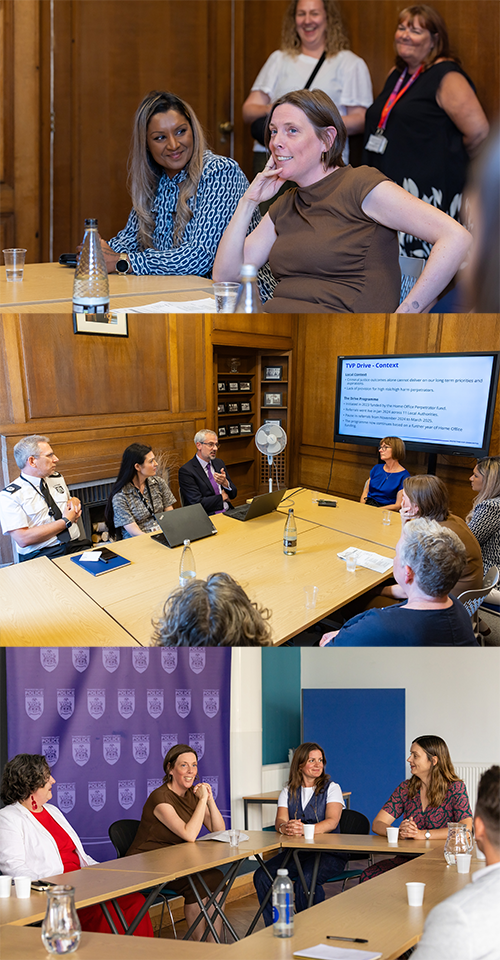
In 2025, as the Drive Partnership marked its 10th anniversary, the Home Office announced a four-year funding programme to expand the Drive Project across England and Wales.
One year on, the teams at SafeLives, Respect and Social Finance can be proud of what we have achieved together.
To date, we have worked with 8,200 perpetrators to reduce the risk they pose, helping to increase the safety of more than 9,100 adult victim-survivors and over 16,700 child victim-survivors. These numbers represent more women and children living with greater safety, and more perpetrators being held accountable for changing their behaviour.
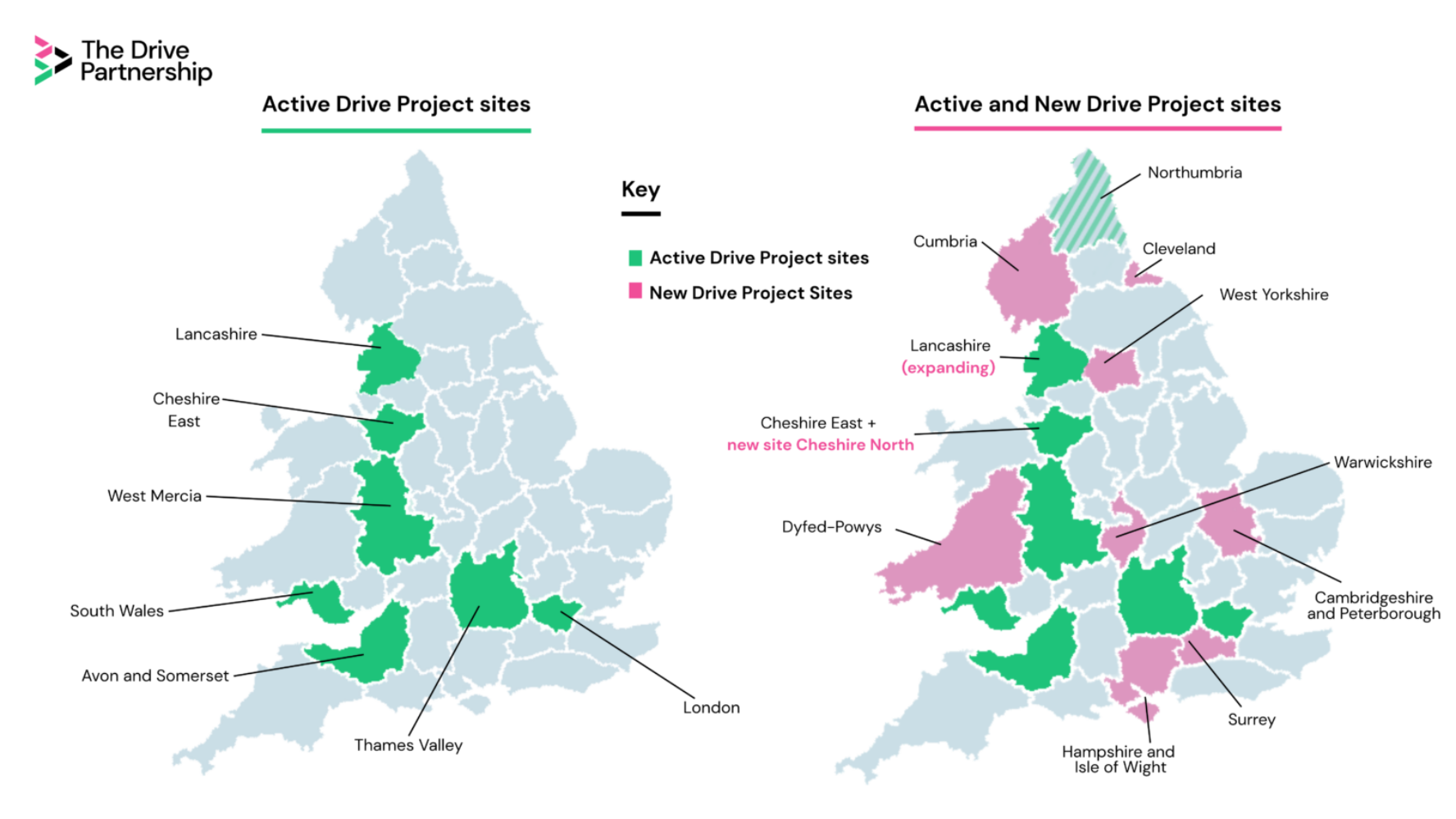
In the first year of this new funding, 10 new Drive Project sites have launched, bringing the total to 15. That growth is significant, but scale depends on careful implementation, support for local areas, building practitioner confidence, maintaining quality, using robust data and keeping agencies aligned around the same purpose.
That discipline is what turns this intervention into a national programme.
The evidence gives me hope
As the government pursues its Freedom from Violence and Abuse strategy, the team at the Drive Partnership continues to build the evidence base, demonstrating that investment in perpetrator work delivers outcomes – in changing high-risk behaviour, reducing harm and making victim-survivors safer.
The independent University of Bristol evaluation has created powerful evidence that multi-agency intervention works. Among Drive Project service users, physical abuse reduced by 82%, harassment and stalking behaviours by 75%, and jealous and controlling behaviours by 73%.
What must come next
For Social Finance, the Drive Partnership is deeply important because it embodies the organisation’s core purpose – using evidence, partnership and disciplined implementation to create lasting, widespread change for people and communities. The Drive Partnership shows what is possible when teams like those at SafeLives, Respect and Social Finance combine their expertise, share responsibility and refuse to accept systems that allow violence against women and girls to continue.
I welcome the Prime Minister’s commitment to accelerating the pace of change in tackling violence against women and girls. The next step is to turn that ambition into a sustained, joined-up response: strengthening specialist services for victim-survivors alongside continuing to back evidence-led approaches that challenge harmful behaviour and hold those causing harm accountable.
The progress to date is significant but the work is not finished. Lasting change will depend on continued action to challenge harmful behaviour and reduce risk and making sure that every victim-survivor can access timely, specialist support wherever they live.
I look forward to working with the teams at SafeLives, Respect and Social Finance as they scale this work to disrupt the cycle of domestic abuse and help to create a safer society for women and children.