
Abianda: Supporting girls and young women to increase safety, independence and agency
Tags
My background is rooted in direct youth work practice with young women and girls, particularly those whose experiences of harm were not always well understood by the systems around them. Over the years, my work has focused on developing specialist responses to criminal exploitation, gang association, county lines, violence against women and girls, and the ways these issues intersect with poverty, racism, trauma, adolescence, gender inequality and structural exclusion.
A significant part of my expertise is in developing practice models and organisational infrastructure that are participatory, relational and grounded in lived and practice expertise. At Abianda, we describe this as “participation is protection”. This means that girls and young women are not only recipients of support, but active contributors to how services, systems and responses are designed, understood and improved.
I also work across strategic and policy spaces, including safeguarding, youth justice and violence against women and girls partnerships, and I have contributed to sector thinking on how girls and young women affected by criminal exploitation can be better seen, understood and supported.
What led you to set up Abianda?

Abianda was set up in response to a gap I kept seeing in my youth work practice, in services and systems. Girls and young women affected by ‘gangs’, criminal exploitation and violence were often present in the work, but they were not always visible in how the issue was understood or responded to.
At the time, much of the public and professional narrative around ‘gangs’ and exploitation was focused on boys and young men. Girls and young women were often seen only in relation to sexual exploitation, or they were overlooked altogether. When they did come to the attention of services, their behaviour was sometimes interpreted through a narrow lens: as risky, non-compliant, difficult, or making poor choices. The wider context around them was often missed: coercion, grooming, abuse, poverty, family and peer dynamics, community violence, racism, misogyny, fear, love, loyalty, survival and limited options.
With Abianda, we wanted to build an organisation that could hold the complexity of young women’s lives, without reducing them to either victims or perpetrators. We wanted to create support that was gender-specific, relational, non-judgemental and grounded in the realities of young women’s lived experience.
From the beginning, our aim has been to support girls and young women to increase safety, independence and agency, while also challenging the systems and structures that can too often make them invisible.
What services do you provide for girls and young women?
Abianda provides specialist support for girls and young women aged 13 to 25 who are affected by, or at risk of, criminal exploitation and violence.
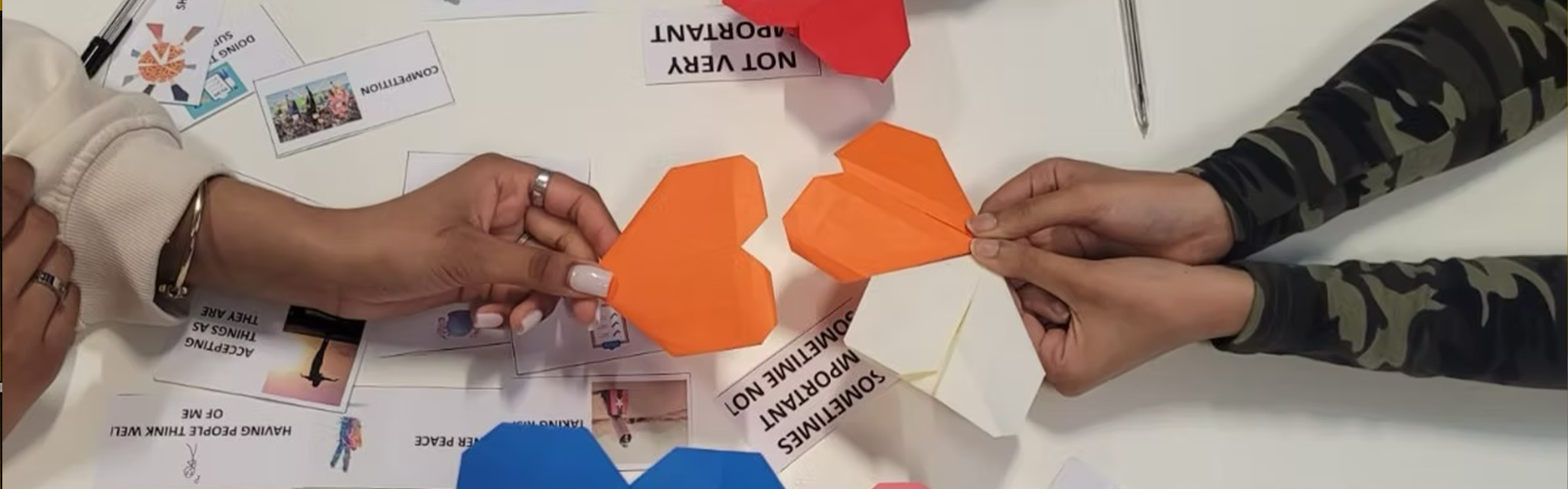
Our services include one-to-one support, group work, contextual safeguarding projects and participation opportunities. Through our direct work, we build trusted relationships with young women and support them to make sense of their experiences, increase safety, strengthen their confidence, build networks of support and develop greater independence and agency in their lives.
Our one-to-one work is often with young women experiencing significant harm and complexity. We work relationally and at the young woman’s pace, recognising that trust, safety and change are built over time. We do not start from the question “what is wrong with her?” but from “what is happening around her and how has she managed to survive?” This helps us understand the wider ecology of a young woman’s life, including the people, places, systems and social conditions that may be contributing to harm or creating opportunities for safety.
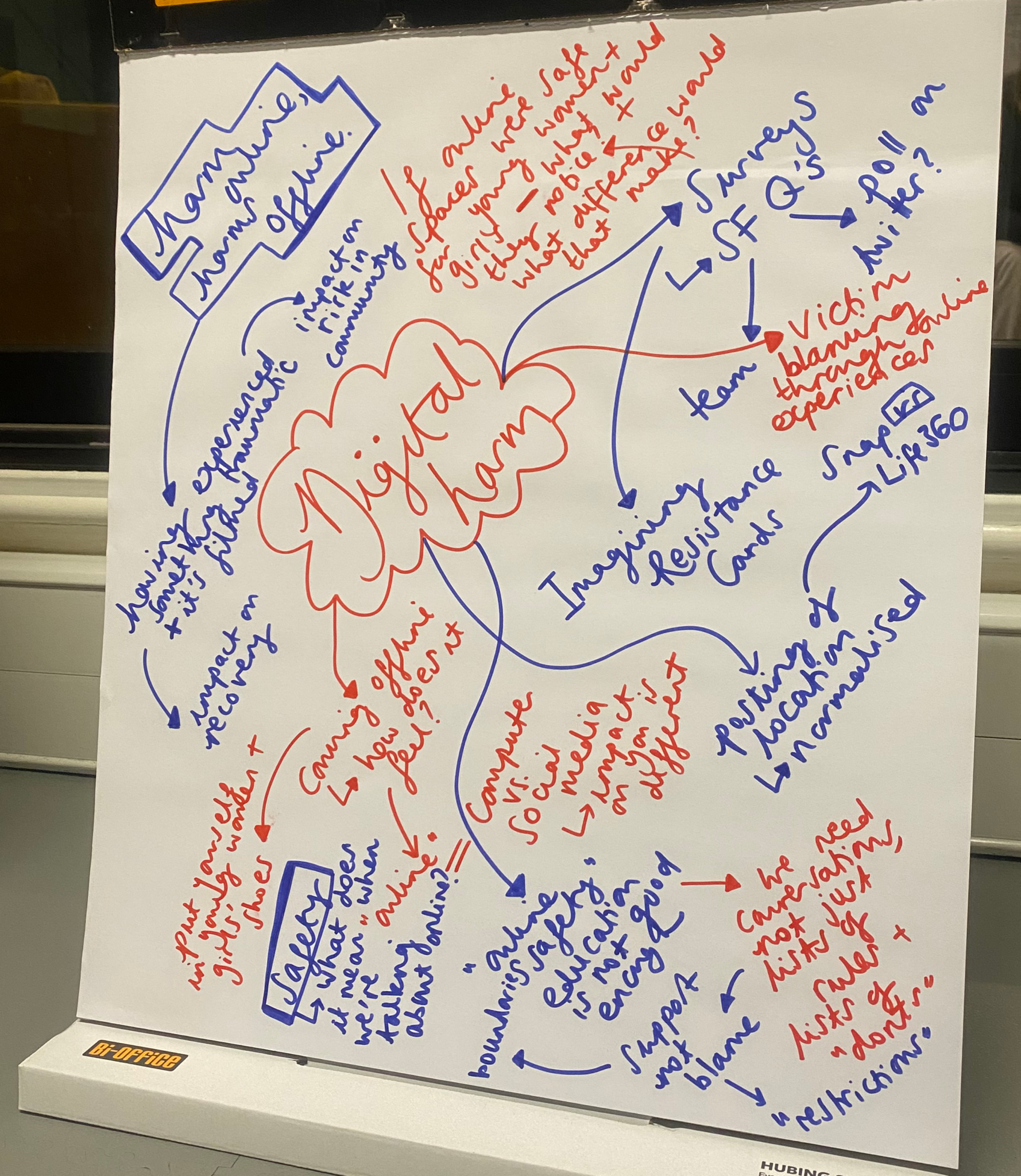
Our group work creates spaces for girls and young women to explore issues that affect their lives collectively. This might include exploitation, relationships, violence, gendered expectations, identity, power, safety, friendship, community and systems. The group setting allows young women to experience peer validation and collective understanding, which can be powerful in reducing shame and isolation.
Participation is also central to our work. Young women with lived experience are central in shaping Abianda’s services, training, strategy, governance and systems change work. For us, this is not an add-on. It is part of the protective infrastructure that helps young women move from being acted upon by systems to having voice, influence and power within them. Young women are employed in the Abianda staff team, sharing spaces, power and decision making.
What services do you provide for those working with girls and young women?
Alongside our direct work, Abianda provides training, consultancy, practice development and systems change support for professionals, organisations and partnerships working with girls and young women affected by exploitation and violence. This is about upskilling and capacity building and ensuring that services and practitioners have the awareness and tools to identify young women early, prevent harm from escalating and have the tools and confidence to do direct work with them in a way that meets their needs.
Our training supports practitioners to better understand the gendered and contextual nature of criminal exploitation and violence. We help professionals move beyond individualised or behaviour-focused responses, and instead develop a more nuanced understanding of risk, harm, power and safety in young women’s lives.
We also support organisations and local areas to strengthen their practice responses. This can include consultancy around service design, practice frameworks, safeguarding approaches, participation, contextual safeguarding, risk assessment, and how to build more relational and gender-responsive systems.
A key part of our work with professionals is helping them sit with complexity. Girls and young women affected by exploitation are often navigating overlapping experiences of victimisation, survival, agency, coercion and constraint. Effective practice requires professionals to be able to hold those tensions without defaulting to blame, disbelief or oversimplified categories.
We also bring young women’s voices and expertise into professional learning and systems change work, where it is safe and meaningful to do so. This helps ensure that services are not designed only around professional assumptions, but are informed by the realities of young women’s lives.
Can you explain how you work with girls and young women and what makes your model of practice unique?
Abianda’s model of practice is built around four interconnected pillars: participatory, contextual, ecological and solution-focused practice.
Our participatory approach means that young women are involved in shaping the work that affects them. We believe participation is protective because it supports young women to build voice, confidence, agency, belonging and influence. It also improves services and systems because it brings lived expertise into spaces where decisions are made.
Our contextual approach recognises that harm does not only happen within individual relationships or families. For many girls and young women, risk and harm are located across peer groups, schools, neighbourhoods, social media, public spaces, transport networks, services and wider social conditions. We therefore have to understand the contexts around a young woman, not simply focus on her behaviour.
Our ecological approach helps us look at the whole system around a young woman’s life. We are interested in what is happening around her, what pressures she is navigating, what resources she has access to, where power sits, and what needs to change in the environment around her for safety to increase.
Our solution-focused approach means we do not define young women by harm alone. We pay attention to strengths, hopes, skills, relationships, moments of resistance and possibilities for change. This does not minimise the seriousness of the harm young women experience. Instead, it helps ensure that support is not only about managing risk, but also about building independence, agency and a future that feels more possible.
What makes our model unique is the way these elements come together. Abianda’s work is not about pathologising young women. It’s about working towards her desired outcomes and supporting her towards independence and agency.
We work with young women, practitioners, organisations and systems because we know that safety cannot be created by asking a young woman to change in isolation. It requires the people and structures around her to change too.
How did you get involved with the Improving Support for Girls and Young Women fund?
Abianda became involved in the Improving Support for Girls and Young Women programme because the aims of the fund closely aligned with our organisational purpose and practice expertise. We have been working across London for over 12 years supporting advancement of practice and sector knowledge. This is the natural next step!
We were also very excited to have the opportunity to work with partners that we respect hugely. Colleagues at Social Finance, Agenda Alliance, Research in Practice and University of Lancashire are people we hold in very high esteem and who have brilliant track records in evidence based work and integrity of approach. We feel very lucky to be alongside them all!
The fund created an important opportunity to focus specifically on girls and young women impacted by gangs, violence and exploitation. For us, this focus matters. Girls and young women are often present in these issues, but they can still be under-recognised in funding, data, service design and strategic responses. A dedicated programme creates space to ask better questions about what girls and young women need, what is currently missing, and how local systems can respond more effectively.
Abianda’s role has been shaped by our experience of working directly with young women, our practice framework, and our commitment to participation. We brought specialist knowledge about the gendered dynamics of exploitation and violence, as well as experience of supporting organisations and partnerships to think differently about risk, need, safety and agency.
What is your role in the fund?
Abianda brings specialist practice expertise, lived experience insight and a gender-responsive lens to both strands of the fund.
In the Local Groups strand, our work has focused on supporting the development of the fund that is grounded in the realities of girls’ and young women’s lives. We have also contributed our expertise in training, co-production and participation, helping to ensure that young women’s voices inform the development of the work in meaningful and ethical ways.
In the Risks and Needs Framework strand, our role is to contribute specialist knowledge about how risk and need show up for girls and young women affected by gangs, violence and exploitation. We will be convening groups of young women to ensure their voices are informing the learning and recommendations made.
The Local Groups strand has the potential to improve support and provision on the ground, while the Risks and Needs Framework strand is about strengthening how girls’ and young women’s risks and needs are understood, identified and responded to.
These two things have to work together. If risk and need are not understood well, girls and young women may not be referred to the right support, or their experiences may be misread. Equally, if specialist provision is not available, even good identification will not be enough.
The strength of the programme is that it brings these questions together. It asks: how do we better understand what is happening for girls and young women, and how do we build the right support around them? And, what do young women and girls say about all of this!
For Abianda, this is crucial. We know that girls and young women affected by gangs, violence and exploitation are often navigating complex and overlapping forms of harm. They need services that can respond to that complexity, and systems that can see them clearly.
Is there anything else you want to add?
One of the things I want to emphasise is that improving support for girls and young women is not simply about adding girls into existing models. It requires us to think differently.
It requires a gendered lens, but also an intersectional one. It requires us to understand exploitation and violence not only as individual safeguarding concerns, but as issues shaped by relationships, contexts, systems and structural inequality. It requires us to listen carefully to young women, including when what they tell us challenges professional assumptions.
At Abianda, we have learned that young women’s safety increases when they are seen in the fullness of their lives. That means recognising harm, but also recognising capability. It means responding to risk, but also building agency. It means working with individual young women, while also changing the systems around them.
The Improving Support for Girls and Young Women programme is important because it creates space for that more nuanced and specialist work. It helps keep girls and young women visible in conversations where they have too often been missed.
