Supporting innovation through co-creation with people living with dementia
Tags

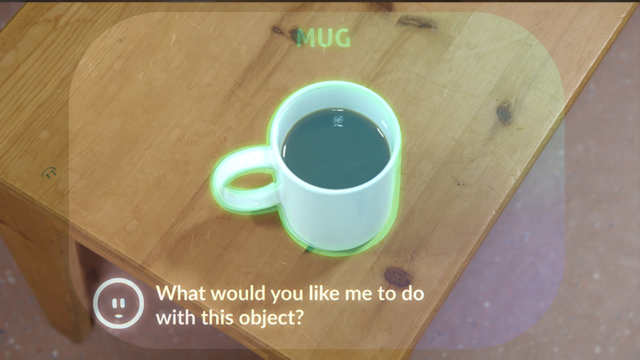
The winning team, CrossSense, are developing AI glasses that help users recognise objects and people.
One in three people born in the UK today will develop dementia in their lifetime, with around a million people in the UK living with a form of dementia now. This is projected to rise to 1.4 million people by 2040.
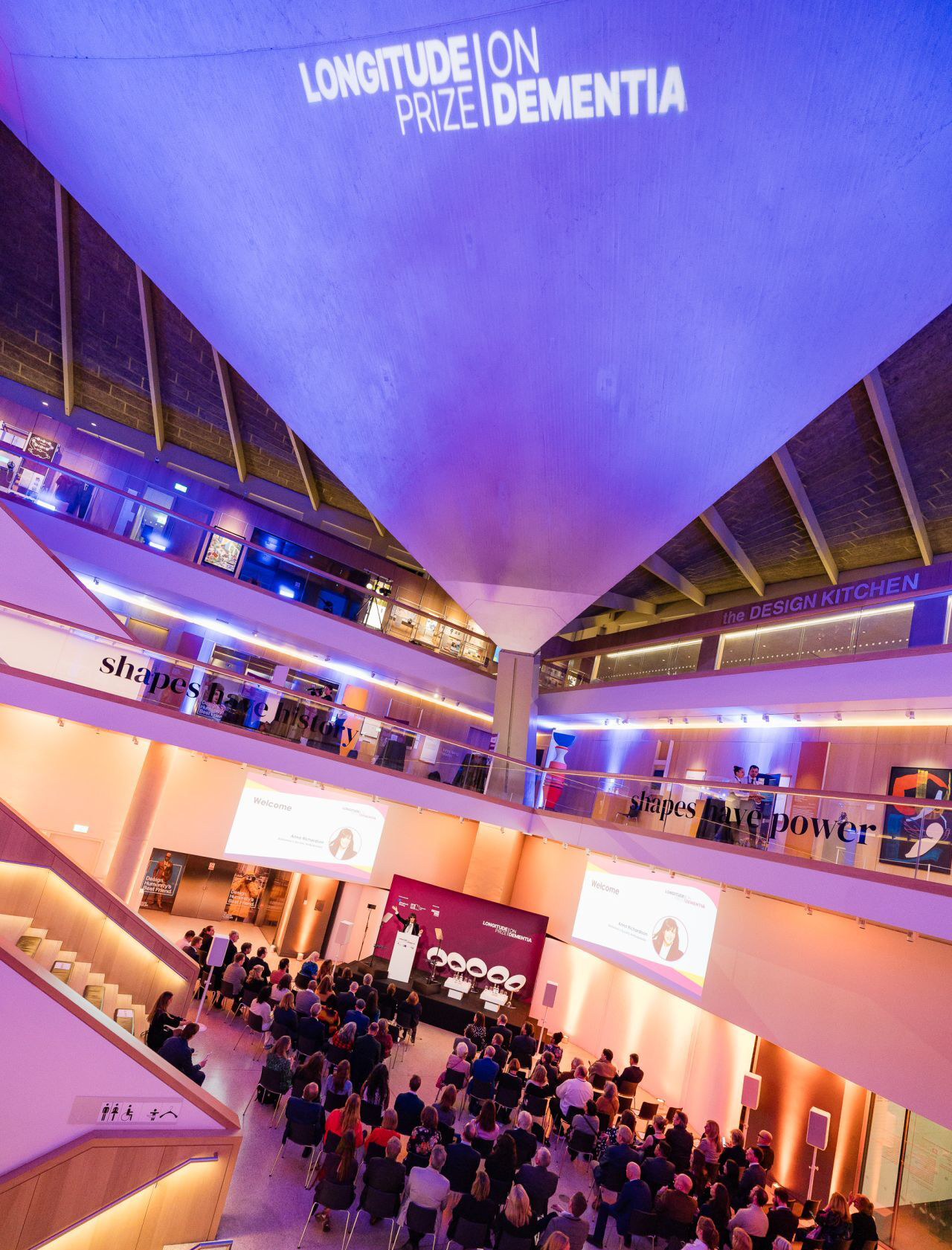
The £4 million+ Longitude Prize on Dementia – funded by Alzheimer’s Society and Innovate UK and delivered by Challenge Works (part of Nesta) – was a global challenge to innovators to develop tools for people living with dementia that can help them to live safely and independently.
Social Finance, with PUBLIC and Digital Care, worked with Challenge Works to provide specialist support to the finalists.
The finalists
We supported the five finalist teams from around the world with training, mentoring and resources to develop their products:
CrossSense – the team from Animorph in the UK are developing high-tech AI glasses that help users recognise objects and people.
Theora360 – A smartwatch developed by Clairvoyant Technologies Inc in the US to predict and prevent falls using football pitch sensor technology.
Autonomous – From Associação Fraunhofer Portugal Research, Portugal, a smartwatch-based app to provide guidance on daily routines.
Supersense Technologies in the UK is developing an at-home monitoring system without cameras or wearables to maintain users’ privacy.
Memory Aid from The MARCS Institute at Western Sydney University and Deakin University’s Applied AI Institute, Australia, is a home assistance device that looks like a phone to remind users of daily activities.
The winning team – CrossSense
CrossSense combines smart glasses with an AI assistant that identifies everyday objects. For people living with dementia it can support them to complete daily activities to help them to live independently and safely in their own homes. The technology is designed to learn people’s routines and preferences to provide personalised support.
The camera built into the smart glasses interprets objects to warn users of potential hazards as well as guiding them through regular tasks.
Find out more about CrossSense on the Challenge Works website and follow the progress of their development.


How we supported the finalists
Setting success criteria
We framed success as empowering innovators to build sustainable and impactful solutions for people living with dementia, including:
- Building products that are user centred and consider the unique needs of those living with dementia
- Providing equitable support and access to the international cohort
- Supporting innovators to with a credible path to sustainability and scale
- Providing tailored and hands-on support with capacity as needed
- Catalysing wider impact beyond the Prize by fostering new collaborations and learnings
- Taking an outcomes-based approach and focusing on what matters to people living with dementia retaining independence
Tailoring support for each finalist
Social Finance supported the five finalists focusing on two broad areas: user-centred design (UCD) and product development. We worked alongside PUBLIC and Digital Care, who provided business and scaling support via a commercialisation bootcamp.
For each of the five finalists, we completed a needs assessment, looking at their individual requirements in five areas:
- Wide support areas
- User-centred design
- Technical
- Business / scaling
- Understanding of dementia
We offered tailored for each finalist, using experts to target specific needs and supporting teams with user testing and business scaling design from Social Finance’s human-centred design experts:
- Group workshops on accessibility and ethical design considerations for people living with dementia, and best practice for product development to balance user needs and viability.
- Expert surgeries on recruiting product testers, clinical and digital safety standards for people living with dementia. and the latest developments in dementia research.
- 1:1 tailored support for each team, based on their priority needs – for example, sourcing technical expertise in Unity for one finalist
- Access to a community of global experts.
We created an environment of open collaboration and shared learnings among the finalists, to spread the impact of work across programme partners. We also amended our support offer in response to teams’ concerns about confidentiality and intellectual property, to focus more on individual team support rather than group progress sessions.