Trailblazer programme
Tags

Trailblazer sites
West Hertfordshire Teaching Hospitals NHS Trust has been commissioned by The Office for the Impact Economy, the Department of Health and Social Care and NHS England to lead its Trailblazer programme, with Macmillan Cancer Support and Social Finance, supported by the Strategy Unit, as delivery partners.
All ICBs and local government partners were invited to apply to the programme, which represents an important opportunity to test a different relationship between national government, local health and care systems and external investment, giving places greater flexibility to determine how resources can be used to achieve better outcomes for their populations. The number and quality of applications received demonstrates the appetite from local systems for greater flexibility and to trial new approaches to funding closer to home.
The Trailblazer investment programme will support the selected sites to explore how greater local autonomy, innovative finance and a stronger focus on outcomes can accelerate the shift from hospital-based treatment towards more preventative, holistic and integrated care closer to home.
The six Trailblazers
The six Trailblazers were selected for the strength and ambition of their proposals, strong local partnerships and their potential to turn innovative ideas into lasting change. The sites bring different approaches and experience; from tackling inequalities and supporting people with complex needs, to shifting care out of hospital and strengthening community-led support.
The sites will receive intensive support over the next seven months to develop new models of care and prepare them for potential social investment from April 2027.
The six selected sites and their proposals are:
Lead applicant | Bristol NHS Foundation Trust | |||
Co-applicants |
| |||
Proposed service | Bristol proposed a 1,000 Days Neighbourhood Model that aims to improve people’s last 1,000 days and support more care to happen outside hospitals. With an initial focus on Weston-super-Mare and potential to expand across North Somerset, the proposed intervention will target people who are frail, have multiple conditions, or are approaching the end of life, combining proactive identification through population health data and trusted community networks with multidisciplinary working and VCSE-supported care coordination. | |||
ICB geography | Gloucestershire, Bristol, North Somerset and South Gloucestershire ICB | |||
Lead applicant | Lewisham Health and Care Partnership and Healthier Greenwich Partnership | |||
Co-applicants |
| |||
Proposed service | The proposed intervention is an integrated neighbourhood model for LTCs, frailty, cancer, end of life and multimorbidity in Lewisham and Greenwich. The model builds on existing Integrated Neighbourhood Teams, population health management and proactive care approaches, while making cancer an explicit focus within neighbourhood delivery and strengthening links between health, social care, primary care and the voluntary sector. | |||
ICB geography | South East London ICB | |||
Lead applicant | Navigo Health & Social Care CIC on behalf of North East Lincolnshire Health and Care Partnership | |||
Co-applicants |
| |||
Proposed service | Navigo proposes a Proactive Neighbourhood Care and Coordination Service across North East Lincolnshire, bringing together primary care, community services, mental health, adult social care, VCSE partners and population health management. The service designed around whole-person care, recognising that people living with frailty, multiple long-term conditions, cancer, palliative and end of life care needs, mental health challenges and wider social issues often require support from multiple organisations. The proposal builds on existing neighbourhood work, integrated working arrangements, community urgent response services and partnership infrastructure, with a particular focus on proactively supporting people with complex needs before they reach crisis point. | |||
ICB geography | Humber and North Yorkshire ICB | |||
Lead applicant | RM Partners in partnership with North Central London Cancer Alliance | |||
Co-applicants |
| |||
Proposed service | RM Partners and North Central London Cancer Alliance are proposing a large-scale neighbourhood cancer support model combining digital navigation, personalised care planning, prehabilitation, rehabilitation and targeted community-based support, delivered through the NHS App and local VCSE, primary care and neighbourhood networks across 19 London boroughs. | |||
ICB geography | NHS West and North London ICB | |||
Lead applicant | North Notts Partnership (led by Sherwood Forest Hospitals NHS Trust) | |||
Co-applicants |
| |||
Proposed service | The proposed intervention is a scaled neighbourhood model in North Nottinghamshire for people with severe frailty, cancer and multiple long-term conditions, focused on proactive rather than reactive care. The model will combine healthcare, community services, local government and VCSE support around a cohort of people with three or more long-term conditions and significant frailty, with particular emphasis on addressing the wider building blocks of health, improving care coordination and helping people manage their conditions in the community. | |||
ICB geography | Derby & Derbyshire, Lincolnshire, Nottingham & Nottinghamshire ICB | |||
Lead applicant | York and Scarborough Teaching Hospitals NHS Foundation Trust | |||
Co-applicants |
| |||
Proposed service | Building on successful local frailty services, this programme will develop and scale a neighbourhood-based model of care that helps older people remain independent through proactive, multidisciplinary support closer to home, reducing avoidable hospital use across urban, rural and coastal communities. The proposal focuses on expanding and scaling a neighbourhood-based frailty model to support older people with frailty and complex needs to remain at home and avoid unnecessary hospital admission. Building on the success of local services, the model will deliver a coherent, consistent, neighbourhood approach to care of the elderly with clearly defined pathways through a single point of access. The model includes proactive identification of people at risk, comprehensive geriatric assessment, neighbourhood multidisciplinary teams, urgent community response and virtual wards, with a particular focus on spreading successful approaches from York into rural and coastal communities such as Scarborough and Bridlington. | |||
ICB geography | Humber and North Yorkshire ICB | |||



These 6 trailblazer pilots will help lead the way in showing how locally led services can work together in the areas of greatest need, and support people to live healthier, more independent lives. The programme is a key part of our 10 Year Health Plan, helping us shift from treating sickness to preventing it in the first place, and giving people the help they need in the heart of their own communities.
Rt Hon Dame Diana Johnson, Minister of State, Department of Health and Social Care
What does the programme offer?
The Trailblazer programme will prepare the selected sites to be ready for social investment. That means ensuring they have built new ways of working, governance and delivery mechanisms to deliver these localised services.
West Hertfordshire Teaching Hospitals NHS Trust will act as a ‘mentor’ to the Trailblazer sites, offering support and practical advice. Macmillan Cancer Support and Social Finance will provide expert financial and technical support to help local health and care systems build the skills, confidence and culture needed to attract and use finance and impact investment to improve community-based care.
A key part of model development and selection will be market engagement with potential social investors. The expectation is that the sites will receive impact investment from April 2027. Learning from the programme will be used to produce playbooks and frameworks for a future wider national rollout, helping inform the future development of neighbourhood health services, as well as wider applicability for how public services can effectively partner with impact capital.
Macmillan has committed to invest £250 million in neighbourhood health across the UK over the next 3 to 5 years and intends to act as a cornerstone investor in the Trailblazer sites after the development programme. Its investment is expected to help attract other partners and investors, increasing the funding available to transform care closer to home.

“By working in close partnership with a wide range of partners in Hertfordshire, we’ve already rolled out a new model for providing joined up, expert care for older people with complex health needs – on their doorstep and tailored to their specific needs. We now want to encourage other NHS Trusts and local community organisations to consider becoming a Trailblazer site to deliver meaningful change in their local areas.”
Toby Hyde, Managing Director, South West Hertfordshire Health & Care Partnership
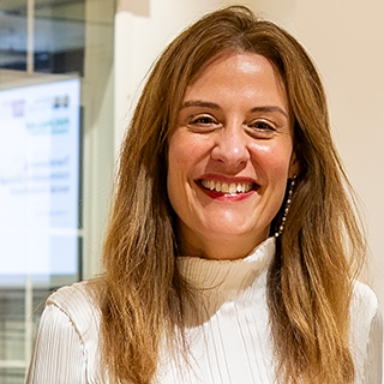
“These six Trailblazer sites are doing something special, and I cannot wait to see them become the start of something much bigger. Neighbourhood health is about redesigning care around people’s lives: bringing health services, local organisations and communities together to create support that is more connected, more personal, and closer to home. These sites will lead the way in showing what’s possible.
“Macmillan is proud to be a cornerstone investor, helping to unlock investment from others. But this is the start of a journey. We want to see more investors backing neighbourhood health, with government investors and local partners working together to create the conditions for new approaches to grow and spread, so more people can benefit from connected, personalised care closer to home.”
Gemma Peters, Chief Executive, Macmillan Cancer Support

“Delivering neighbourhood health is crucial to improving health and care for communities, as well as helping the NHS become financially sustainable.
“At Social Finance we work in partnership to deploy impact capital to drive change across the whole system and I am delighted to see this Government commitment to enabling social investment to back outcomes in health.
“What is most exciting is not just the first wave of six sites, but what comes next and the potential to transform how we invest in health in the future.”
Caroline Gadd, Chief Executive, Social Finance
A new approach
Current funding models can leave people stuck in a cycle of reactive, hospital-based treatment, particularly those living with cancer and other long-term conditions who often need support that goes beyond clinical care alone.
In contrast, this new approach focuses on long-term, preventative and community-based support, helping create more joined-up care that is designed around people’s lives and delivered closer to home.
Last year, West Hertfordshire Teaching Hospitals NHS Trust – in partnership with Macmillan Cancer Support and Social Finance – launched a pioneering collaboration that leverages around £10 million of social investment to help redesign care. Social investment is a mechanism used to fund preventative, community-based healthcare services using upfront capital from social investors, which the NHS only repays if the service successfully achieves specific, pre-agreed health outcomes.
By focusing on communities facing the poorest outcomes and greatest barriers to care, the Trailblazer programme also aims to help tackle health inequalities and build more sustainable models of neighbourhood health – and a scalable model that could be replicated nationally.
As well as tackling health inequalities, the programme will also support wider regeneration and community resilience efforts. The programme will place a particular focus on improving support for communities facing the greatest barriers to accessing care and with the poorest health outcomes.
Register for updates on Trailblazer
Applications for the programme have closed, but we’ll keep you informed about other opportunities.