
Work brings people dignity and hope, why would you not give it to them?
Tags
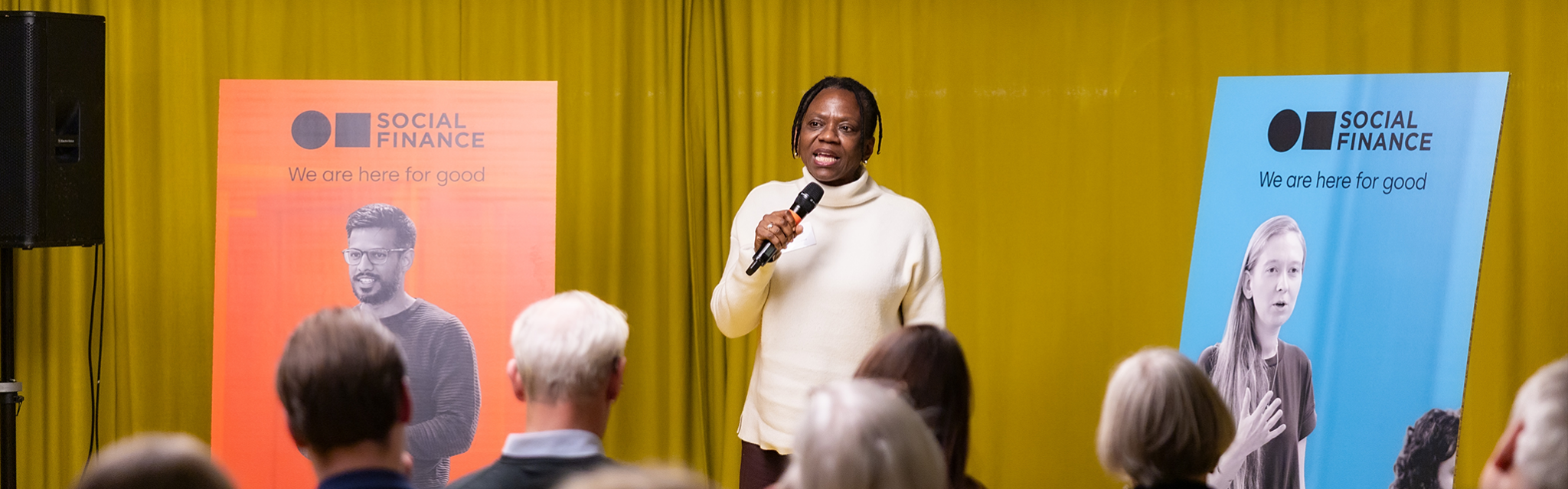
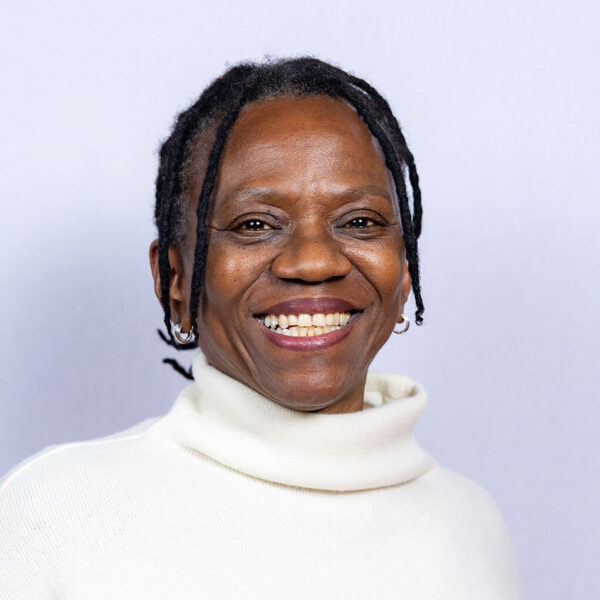
Lela has 25 years of senior leadership experience in the public sector. She worked for 16 years in Islington, including as Assistant Chief Executive at Islington Council. She also worked with NHS England and the Department for Education to improve employment prospects and access to apprenticeships for people with learning and other disabilities. She helped establish and grow Black Thrive, serving as a director for several years and is currently director at Place Matters.
IPS stands for individual placement and support. And the underlying principle is that you support people who want to work, rather than spend ages training them and thinking about what the barriers are. The starting point is to try and get them into employment, and then they can train on the job. It’s quite simple in many ways.
I have a personal connection to it because my younger brother was diagnosed with “paranoid schizophrenia” about 40 years ago and I’ve been his main carer from the family since. It was a shock, as it is for many people, when you get somebody who’s close to you diagnosed with a serious mental illness.
The thing that didn’t make sense to me was the assumption that he would never work again. This is somebody who had a degree – he had just finished his degree in economics from the University of York – and he had been an athlete competing at a national level. It just seemed ridiculous for him to be written off and told you’re never going to work again.
It did not occur to me that some of my experiences were racialised. Why would it? The professionals I came across were generally decent and nice enough people. I got a shock about 20 years later, when I saw the data that Black males are much more likely than their white counterparts to who get diagnosed with a severe mental illness, to end up on very strong medication for the rest of their lives, and to have no access to therapy and no support for employment.
I see IPS as a way of addressing endemic race equity issues as well as health inequality issues. The NHS often talks about addressing health inequalities. For me, IPS is a perfect way to address health inequalities because you are supporting people, whatever their background is, whatever their ethnic origin is, into work.
IPS isn’t just about the NHS getting as many people as possible out of the mental health system and into work. It isn’t just about reducing expenditure on welfare benefits. I see it as a human rights issue – supporting people who have potential to have autonomy and dignity and to fulfil their lives.
And the evidence is so clear that that is exactly what it does.
The data shows that people who do then get employment support are less likely to be ill again, less likely to have as many episodes of illness and more likely, obviously, to have more income. When there is a programme that demonstrably works, why would you not offer it to people as a human right. I also love the fact that it saves the system money and is great for the people it works with. It’s just brilliant.
I see IPS as a way of addressing endemic race equity issues as well as health inequality issues
Lela Kogbara, Board Co-Chair
IPS is an effective and humane way of getting people into work
I got involved after a number of people across the UK, but Rachel Perkins in particular, started the first IPS service in the UK. Rachel and others spent more than 30 years trying to promote its value as a national service. It had been demonstrated in the US as being very effective for getting people with serious mental illness into employment. I became aware of it as an effective and humane way of getting people into work.
I had a meeting with Sir Simon Stevens, who was then chief executive of NHS England, and we talked about the role of the NHS in the employment journey. This has come to be seen as a critical issue because more and more people are being diagnosed with mental illness and more and more people are not working because of mental illness.
The idea was that the NHS itself needed to play a role in employment. There’s loads of research that shows that employment is good for health generally and it prevents mental ill health and supports recovery from mental illness.
Sir Simon Stevens then set up a small team within NHS England to take forward the idea that the NHS could play a much stronger and systematic role in employment because it was in its own interest. I was then given the title of director of employment programmes at NHS England and we set up the first randomised controlled trial for IPS in the UK to see if it would work in primary care, because it was known to be working in hospitals.

At the same time, in 2015, Social Finance established the Mental Health and Employment Partnership (MHEP) to deliver IPS projects, backed by social investment from Big Issue Invest.
The trials and the MHEP proved that IPS was an effective mechanism, so we then set about trying to encourage people from across the country to take up the IPS model and to grow it.
We often talk about scaling good things, but it’s often not understood that actually you can’t just scale by scattering the money across the country, you need some kind of organising infrastructure.
Lela Kogbara, Board Co-Chair
Impact at scale is complex
IPS is an effective mechanism that is known to work and you need a way of spreading it so that everybody, regardless of where they live, can have access to it. To do that you need some kind of organising infrastructure that can support the quality of the service and make sure that the right things are done in the right way by the right people.
Social Finance got involved because of what it does best, which is bringing together the people who know about the specifics of an issue and who are passionate about it, together with the expertise to deal with data and systems, to put in place the infrastructure needed to support something like IPS being scaled across the country.
We often talk about scaling good things, but it’s often not understood that actually you can’t just scale by scattering the money across the country, you need some kind of organising infrastructure (or a “backbone”).
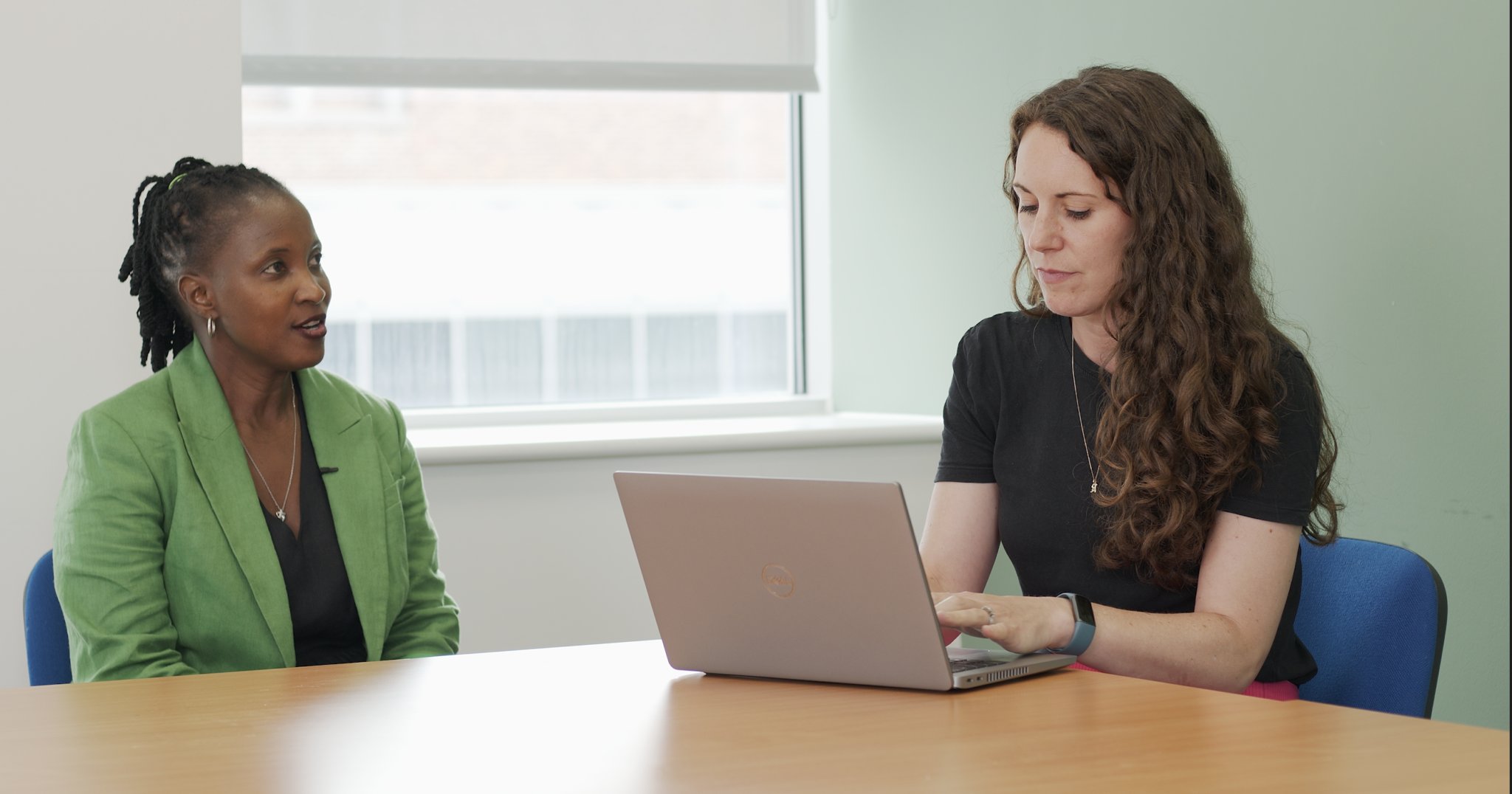
IPS Grow is vital, because it’s really complex to scale something like this across the country. It supports people to deliver quality IPS services and has strategic oversight across the whole country.
It means that we collect data on what’s happening, where, how many people from which ethnic groups and genders are actually receiving the service and then what are the results?
And if it’s not working somewhere, IPS Grow can support the organisations to understand why it’s not working and support them to improve.
Collecting data across the country makes sure there’s an overarching view of what’s going on and making sure that the IPS service is of a consistent quality and there is equal access.
Another important function of IPS Grow is supporting the development and growth of the workforce. When you’re scaling up something like IPS, you need a way of accessing the right people to do the IPS roles – the employment specialists.
Because of having IPS Grow, you don’t have to spend years getting everybody up to minimum quality standards, you can do that much more quickly. It also offers training and support for different issues, like how to go about engaging with employers to get them to employ people with mental health conditions who want to work.
Embedding race equity in IPS
The other thing I’m really proud of is the development of the race equity tool. When you talk about race equity, a lot of people find it a bit stressful and frightening. But we’ve been able to produce something that is sensible and straightforward for people to use.
You start with the data and what it says about your population. Who are you and where are you? There are parts of the country where you might have people from minority ethnic backgrounds or global majority backgrounds that are 50% or more of the population. Other parts where they might be 1% or less. So, we start with the question, ‘who’s your population and are you reaching everybody in your population?’ You start with the data and then make the effort to reach people in proportion to your local population.
The race equity tool is a common-sense mechanism that people can engage with. If you find that people aren’t using the service, you ask yourself: “I wonder why this group isn’t presenting themselves at our service?” – and then you find out why.

Finally, it is sometimes portrayed as if people are being forced into work. It’s that narrative that actually the only reason for the service is to get them off benefits and to stop them being a problem.
But for those of us who’ve been in this space for a while, if you actually talk to the people who are affected, work is one of the most important things for them, something that will bring them dignity and hope. So why would you not make it available to them?
I’m so glad that IPS Grow exists. I’m grateful for my involvement and my small contribution to the whole ecosystem and the whole effort and I feel more optimistic that somebody who is in the same situation as my brother was 40 years ago would have a very different experience now.