
A blueprint for transforming neighbourhoods
Heather McLean, Director of Community and System Partnerships at Macmillan, shares the evolution of Neighbourhood Transformation Funds.
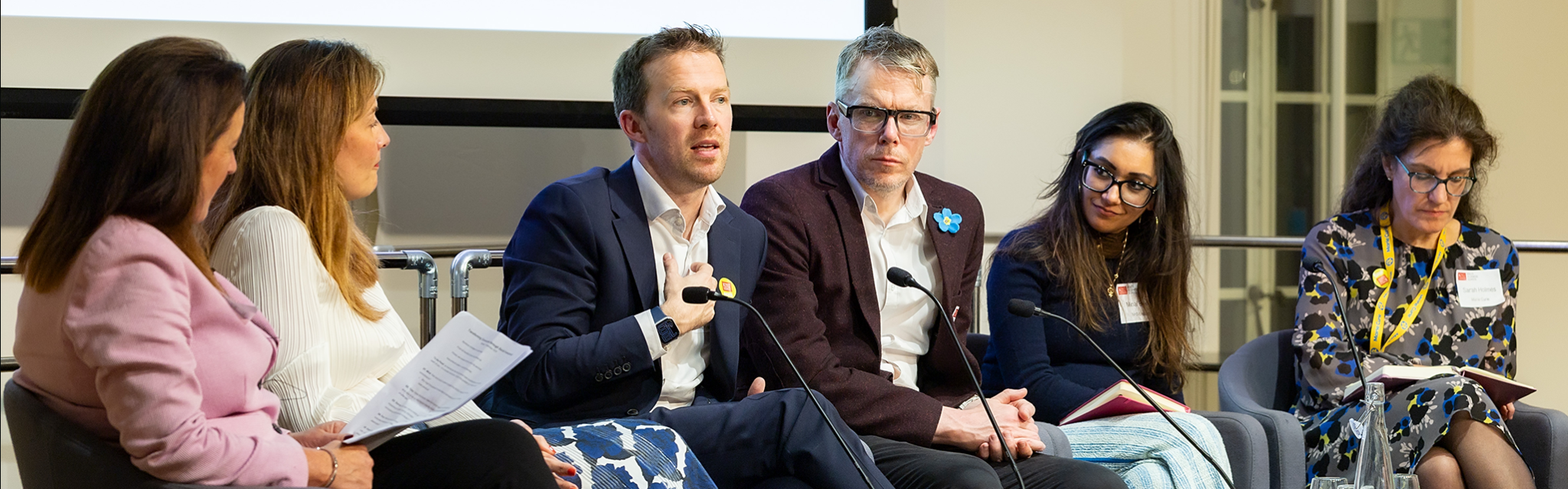
NTF launch event December 2025: Caroline Gadd, Gemma Peters (Macmillan), Toby Hyde (SW Herts Health & Care Partnership), Paul Reynolds (Alzheimer’s Society), Dr Minal Bakhai (NHSE) Dr Sarah Holmes (Marie Curie)
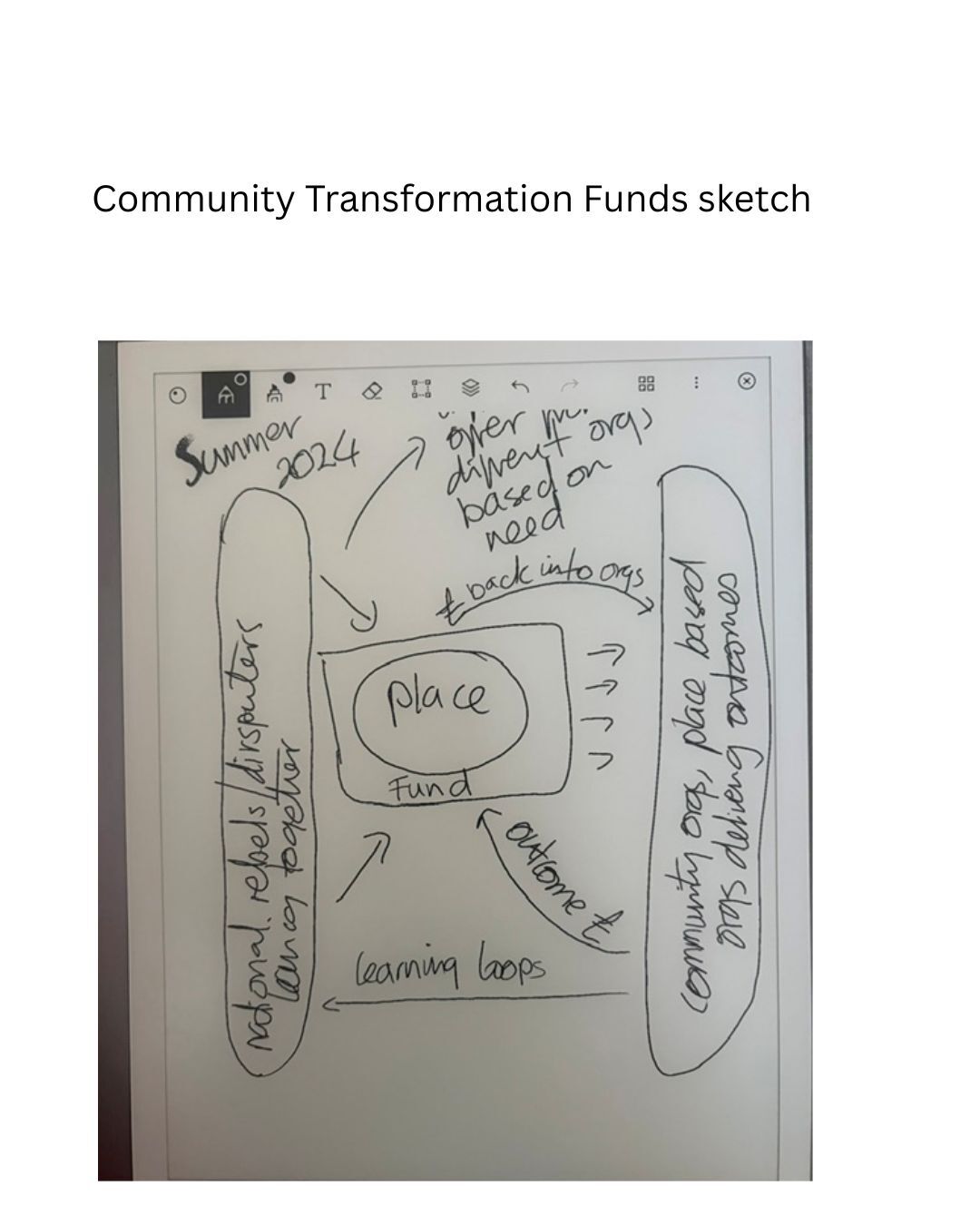
Launched in West Hertfordshire in September 2025 and followed by funds in Lincolnshire and Dorset, Neighbourhood Transformation Funds (NTFs) are testing a new way to finance neighbourhood health. They combine multi-year, outcomes-based investment with local ownership and a formal role for voluntary, community, faith and social enterprise (VCFSE) organisations and people with lived experience.
The aim is practical: fund preventative, person-centred services upfront; repay investment when agreed outcomes are achieved; and reinvest value locally. This helps health and care systems move beyond isolated projects towards sustainable services designed around people’s wider needs.
Alongside this, Macmillan’s Anchor programme integrates VCFSE organisations and people with lived experience into the services funded through social investment, helping to make those services more equitable while building the wider sector’s capacity to shape and deliver services over time.
Shortly after the first NTFs were established, our learning partner King’s College London identified early lessons from developing the model. Their findings emphasised the importance of an aligned vision, flexibility, clarity, sustainability, time and collaboration.
One year on, these lessons continue to hold true. But moving into delivery has also given us an opportunity to reflect on how they are playing out in practice.

I am passionate about making a difference to local communities and creating effective partnerships to deliver positive change. The Neighbourhood Transformation Fund model is all about empowering the VCFSE sector to make a real difference to people’s lives in Lincolnshire and delivering on the promise of neighbourhood health.
John English, Executive Director, Lincolnshire Social Outcomes Partnership CIC
In West Hertfordshire and Lincolnshire, locally focused Community Interest Companies (CICs) are building the governance, leadership and business models needed to become independent place-based vehicles. West Hertfordshire is already mobilising a second investment from a new investor for an additional social outcomes contract – an early sign that the model can attract capital and grow beyond a single intervention.
Dorset has taken a different route to the CIC approach, using an outcomes-based contract with the local health system. This has enabled Dorset to use social investment to accelerate the rollout of 18 Integrated Neighbourhood Teams, building implementation capacity and supporting locally designed solutions developed alongside communities and people with lived experience.
Dorset is also developing an Anchor offer that is creating a stronger and more formal role for VCFSE organisations and lived experience in shaping the system’s transformation.
Together, the Dorset and CIC models are helping us understand how social investment can support neighbourhood health in different contexts and through different organisational arrangements.

Establishing new organisations is never straightforward, particularly when the ambition is to support system-wide change. What has encouraged me most is the willingness of partners to work through challenges together. The CICs are creating a platform for innovation, investment and learning and that gives me confidence about their long-term role in supporting neighbourhood health.
Nigel Hopkins, Chair, Lincolnshire Social Outcomes Partnership CIC
Community workshops to establish the Anchor programmes.


As expected when mobilising new services, we have found that moving from investment to delivery brings practical challenges.
In Lincolnshire, the first social outcomes contract is for a community-based high-intensity-user service. With no established local workforce to draw on, the team needed to develop the skills and support for community-based staff to work confidently with people facing complex circumstances. Addressing this workforce issue early on was a key part of building a sustainable service.
The service has shown encouraging early outcomes – the provision of non-clinical, holistic, personalised support that responds to the wider challenges in people’s lives has led to a reduction in their use of urgent and emergency care.
It also represents a cultural shift: by commissioning a non-clinical service the ICB is recognising that acute demand is not always driven by medical need and supporting the move towards a preventative model of health care.
Integration of VCFSE organisations via the Anchor Programme has perhaps posed our greatest ongoing challenge, as the Anchor’s overall purpose and how it works can be open to different interpretations.
Some partners understood it as a broader programme for tackling health inequalities; others, primarily as a means of funding VCFSE infrastructure and capacity. Both are relevant, but neither captures the Anchor’s role in full.
The Anchor plays a vital role working with funded services to identify where inequities arise in practice. VCFSE organisations and people with lived experience can identify barriers, reach people who may be invisible in existing data and shape more equitable services. Their contribution is strongest when it is built into service design and mobilisation from the outset.
The long-term nature of the NTF investments allows early learning to be built into future service developments and investment decisions. It is important that we continue to share insights widely as neighbourhood health develops, helping local partners learn from what works and adapt approaches to the needs of their communities. As one CIC board member recently put it, “the task of acknowledging and meeting the range of challenges is all part of the process and makes the NTFs stronger as a result”.
It is still early days for NTFs, but there are encouraging signs that the NTF model is scalable across the country as a means to support wider change in how care is designed and delivered. The Trailblazer programme, Commissioned by the Office for the Impact Economy, the Department of Health and Social Care and NHS England, will support up to six integrated care systems to prepare for social investment in neighbourhood health, following an NTF model with Macmillan as the investor.
NTFs could offer a route to more joined-up, preventative care delivered closer to home – and shaped by the communities it serves.
Heather McLean, Director of Community and System Partnerships at Macmillan, shares the evolution of Neighbourhood Transformation Funds.

Social Finance Director explains how NTFs are making a real difference to the lives of patients.
Macmillan and Social Finance are at the forefront of innovation around outcomes-based approaches for social change. The Care and Wellbeing Fund, a £12 million fund set up in 2015, was followed by the launch of the Macmillan End-of-Life Care Fund in 2021, a £36 million investment by Macmillan that is enabling innovative services to deliver improved outcomes for thousands of people approaching the end of life.
Neighbourhood Transformation Funds are the latest evolution of the Social Outcomes Partnership (SOP) model pioneered by Social Finance in 2010.


